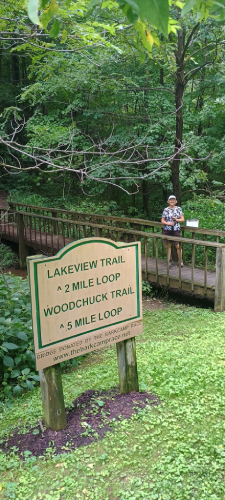
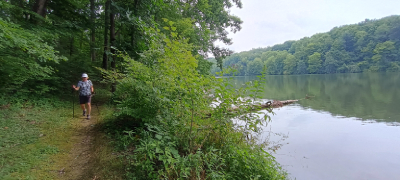
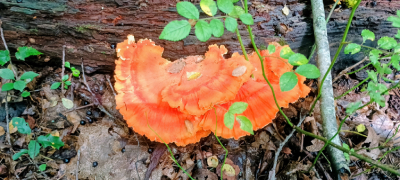
This 1,005-acre state park was a perfect stop to stretch our legs during our 260-mile drive and enjoy the picturesque hills, woodlands and lake. We hiked the two-mile Lakeview Loop Trail and then ascended the .5-mile Woodchuck Loop Trail. Along the trail were plenty of plant growth, unique colorful mushrooms, wild berries, lots of songbirds in the trees and we saw four deer during our trek.
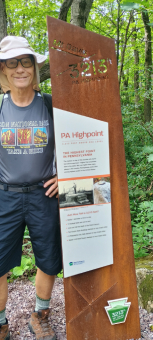
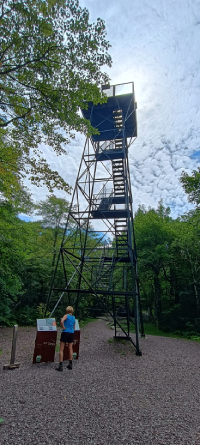
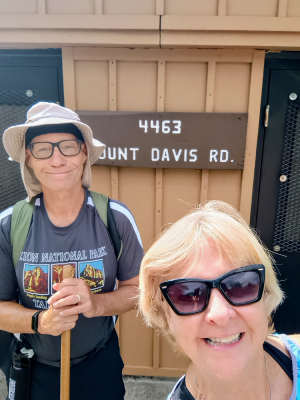
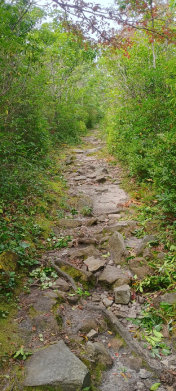
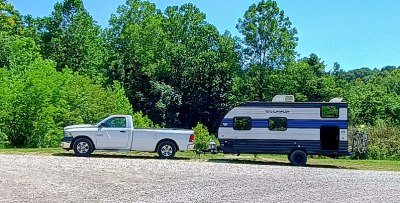
We camped at the nearby Mason-Dixon Campground nestled in the woods three miles from the Maryland State line. We drove over to Forbes State Forest and hiked 1.8 miles on the Mt. Davis High Point Trail built in the 1930’s by the CCC. The crowning achievement was reaching the highest point in the state, about 1.1 miles along the trail. At Mt. Davis at 3,213 feet, was a rock marking the highest point and next to it an observation tower built circa 1931. Fifty feet up or 80 steps later at the top of the tower we had great views of the state forest and surrounding Pennsylvania Laurel Highlands and south into Maryland. The forest trail on this hot, humid day had lots of gnats and insects so bug spray was needed often.
This 2.6-mile trail led us around Horse Run Lake, past Sand Hollow Campground and through hickory and oak forests. Occasionally, we would get great views of the lake through the trees. Even in the woods it was a hot, humid hike with lots of gnats pestering us on the up and down trail.
This was a fantastic park. It is located beside a working quarry, the site of Marble Cliff Quarry, once the largest contiguous quarry in the USA. The park’s theme is outdoor recreation as it offers a mountain bike trail, a sled hill, sport climbing area, miles of hiking trails, small lakes, fishing, canoeing and a big waterfall. It also has the first urban via ferrata in the USA, so named for ladder, rungs, and cables permanently affixed to rock faces and used as climbing aids for the climbers. The climb is roughly 50 feet to reach a 90-foot suspension bridge situated 105 feet in the air. We will have to return to do this.
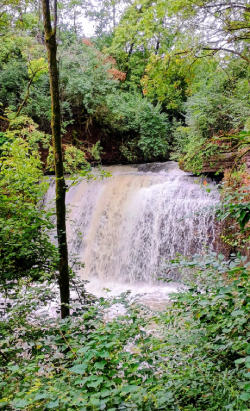
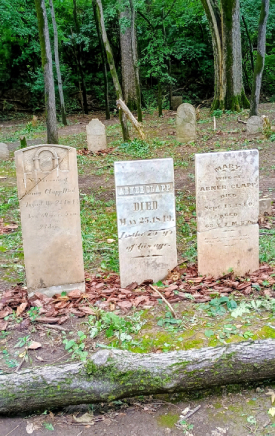
We began hiking on the 1.1-mile North-South Connector Trail which connects the parks three sections. We also hiked on the shorter Flat Rock Trail and then ascended the .6-mile Millikin Falls Trail to an incredible 25-foot gushing waterfall called Millikin Falls which no doubt was aided by torrential rainfall just 90 minutes before we hiked. Near the end of our 3.2-mile hike, we visited the historic Britton Cemetery just off the N-S Trail. It holds the remains of early settlers, many dying between the 1820’s and the 1860’s.
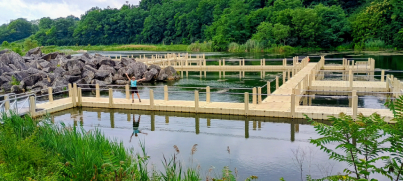
This short .6-mile road/trail stretched north/south across the large CJ Brown reservoir giving a great view of the water and a refreshing breeze on this humid summer morning.
Hiking Team: Dave Miller, Rosie Miller, Holly Eller
Date: June 21, 2026
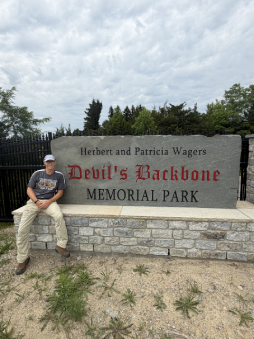
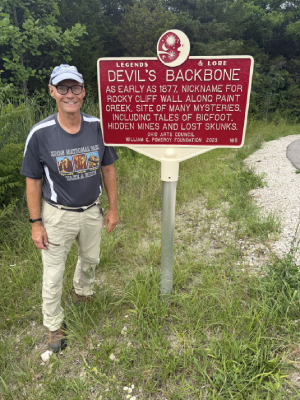
This was my second park that we visited to hike on Father’s Day. As we pulled up to this 24-acre forested wildlife sanctuary park, the historical marker at the park entrance really caught my attention – the site of many mysteries including tales of bigfoot, hidden mines and lost skunks. Wow! I will have to research these cryptid/paranormal claims and the legend and lore of this park land. The name Devil’s Backbone comes from the dramatic, rocky, limestone ridge that towers over Paint Creek (similar to the Devil’s Backbone in western Moraine overlooking the Miami River). Signage states it is dangerous and off limits and warns hikers to stay away from it.
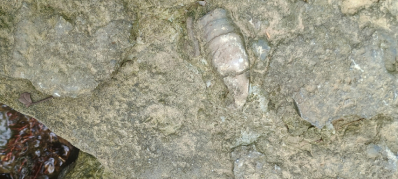
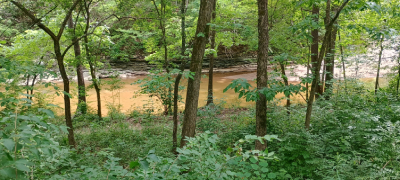
We hiked two trails. The Blue Trail was only .3 miles long and took us down to Paint Creek but what a gold mine it was. Everywhere along this deep gorge were rocks and we easily found dozens and dozens of fossils such as horned coral, brachiopods and bryozoans along the creek bank. We ascended back up to the parking area and then took the one-mile Orange Loop Trail. This trail took us deeper into the thick woods eventually coming to a small loop trail which branched off this larger loop trail. This trail had a tall canopy of trees giving us plenty of shade on this hot day. However, we had no sightings of Bigfoot or lost skunks.
Hiking Team: Dave Miller, Rosie Miller, Holly Eller
Date: June 21, 2026
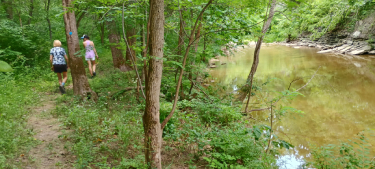
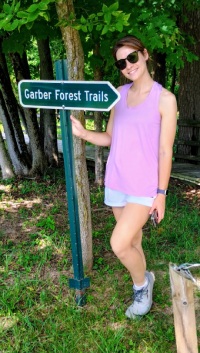
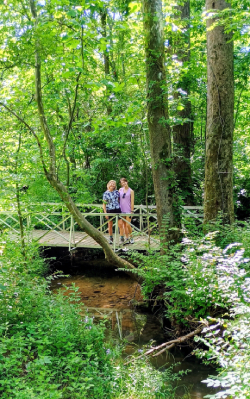
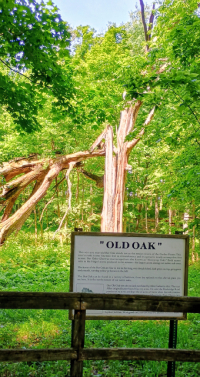
On Father’s Day we hiked 2.1 miles on this 33-acre forested area which was part of the Preble County Park District. We began with the Main Loop Trail walking across a long boardwalk which led us to a 200–300-year-old Bur Oak Tree whose tree trunk is over 14 feet in circumference. The trail had four small bridge crossings over a meandering creek. We then took the Wetlands Trail past Sandpiper Wetlands, a small pond full of frogs, birds and aquatic insects. Joining the Bicentennial Trail, the forest opened into a beautiful wheat field.
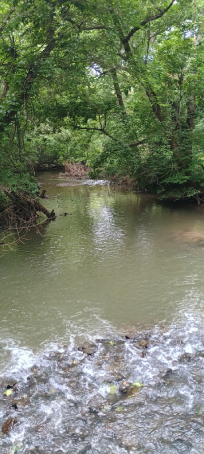
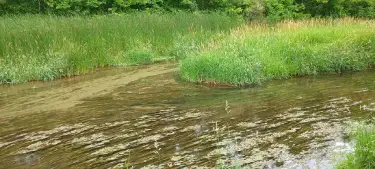
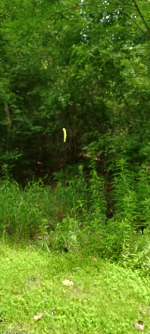
Beginning at the barn and pond area, I hiked just over three miles on three different trails – the Creekside Trail, the Spotted Turtle Trail and on the southeast side, the Out & Back Trail. On this hot, muggy day, the trails were comfortable due to the tree growth along the wetlands and marshes. There were four small bridge crossings over Beaver Creek as the trail led north into the Beaver Creek Wetlands Reserve. Just off the east side of Spotted Turtle Trail was the Loop Trail was the Beaver Creek Overlook observation tower. Along the trails and along the creek I saw ducks, large catfish, chipmunks, frogs, turtles, dragonflies and rubyspot damselflies and heard lots of birds. My favorite, a tiny inch work hanging face high from an invisible thread right in the middle of the trail. Make sure you carry insect repellent with you when you hike.
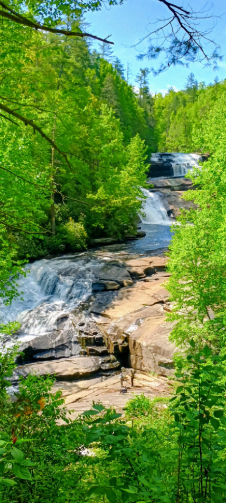
One of four beautiful falls in this forest, the .8 mile up and back trail ascends through thick forest. There are 2 views of the falls, one at the base, where you can only see the bottom falls, and a second upper overlook that lets you view the entire falls. Triple Falls is a 125-foot waterfall and flows on the Little River through the forest. It is a very beautiful waterfall.
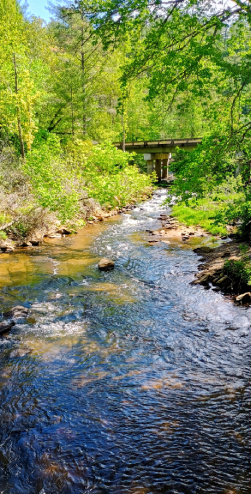
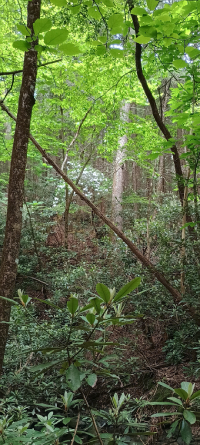
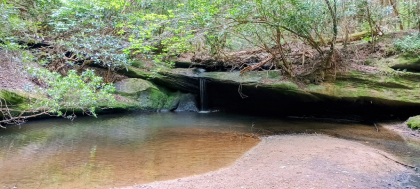
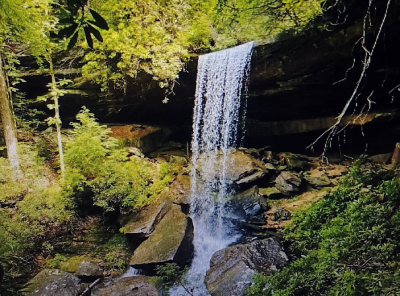
The trail enters the primitive Cane Creek Wildlife Management area surrounded by the Danial Boone National Forest. This section of the 257-mile long Sheltowee Trace Trail descends for over a mile along a beautiful creek which has many large rock slabs. One area has a six-foot waterfall (Photo #3) in a curving rock area reminiscent of Hocking Hills State Park in Ohio. The trail crosses eight tiny stream crossings and then slowly climbs north past two outback campsites until you reach rushing Canes Creek (Photo #6). At one spot you repel down a rope descending large rocks (Photo #5). An old metal bridge takes you across Canes Creek. The trail then wraps around a hill and then you arrive at the thirty-foot falls. The falls (Photo #7) were not as big as usual due to lack of rainfall. Still, it was a beautiful hike and great workout hiking six miles through this thick forest.