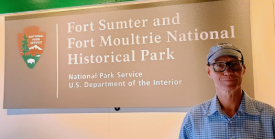
FORT SUMTER NATIONAL HISTORIC PARK Charleston, South Carolina

Expedition Team: Dave Miller, Rosie Miller

Date: November 23, 2025

We departed on a ferry boat from Patriots Point Naval & Maritime Museum, next to the USS Yorktown WWII aircraft carrier. We boated across Charleston Harbor past Castle Pinckney (formally Fort Pinckney) to Fort Sumter, the famous island fort. The boat rides each way were 35 minutes in length.

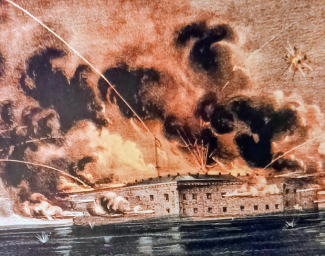
The historical fort was the site of the opening shots of the Civil War fired on April 12, 1861. Originally, the fort was built in 1829, one of a series of coastal fortifications built by the US after the War of 1812. A mortar shell fired from Fort Johnson in Charleston burst over Fort Sumter igniting the conflict. After a 34-hour fight with no fatalities, the Union troops agreed to terms of evacuation. The troops marched out of the fort and boarded a ship for transport to New York. The Civil War had begun. Fort Sumter was now in Confederate hands. During Union bombardment of the fort in 1864 & 1865, a total of 52 Confederate soldiers were killed in the fort.

Photos below show what the original fort looked like before the bombardment and destruction.

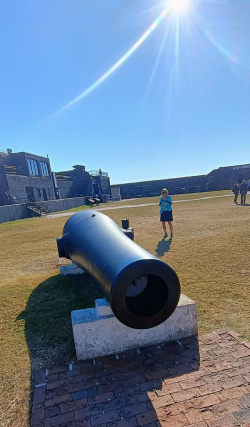
We toured the casements (gun rooms) on the first and second floor levels, the small museum and the parade ground. There were lots of cannons, mortars and war memorabilia. I talked to both park rangers about the Confederate submarine Hunley, the USS Ironclad Patapsco, and if they had any paranormal experiences to relate.

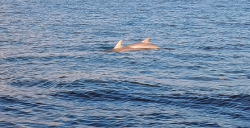
On the way back three dolphins swam parallel to our boat.
LEWIS & CLARK NATIONAL HISTORIC TRAIL – NORTHERN KENTUCKY SECTION Big Bone Lick State Historic Site, Patriot, Ky

Expedition Team: Dave Miller, Rosie Miller, Nick Kelly, Jacque Kelly, Elizabth Kelly, John Kelly

Date: May 18, 2025

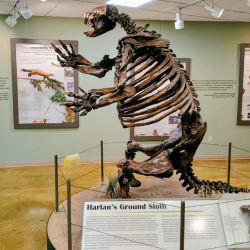
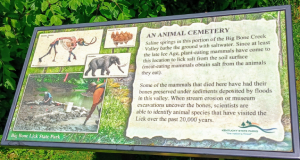
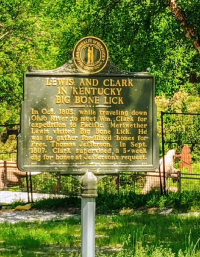
Meriwether Lewis visited here in 1803 as part of his preparations for the Lewis & Clark Expedition. He stopped here while traveling down the Ohio River, collecting fossilized bones for President Thomas Jefferson which were believed to be remains of ancient, giant animals.

After the expedition, Jefferson continued his interest with the fossils at Big Bone Lick. William Clark, accompanied by his brother George Rogers Clark, conducted a major excavation at the site in 1807, collecting a large number of bones and teeth.

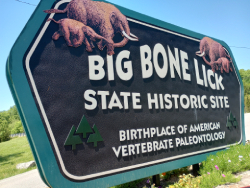
The site is now known as the “Birthplace of American Vertebrate Paleontology” due to the significant fossil collections and discoveries made at Big Bone Lick by Lewis & Clark and others. Big Bone Lick Historic Site is named a National Natural Landmark, one of only 16 so named in the USA.

HIKED ALA KAHAKAI NATIONAL HISTORIC TRAIL Kaloko-Honokohau National Historic Park, Hawaii  

Hiking Team: Dave Miller, Rosie Miller

Date: March 12, 2025

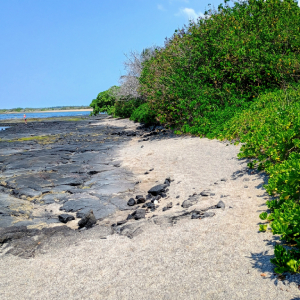
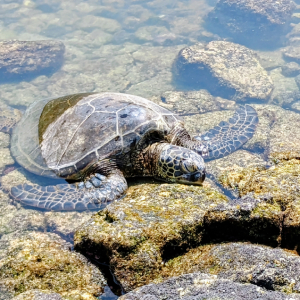
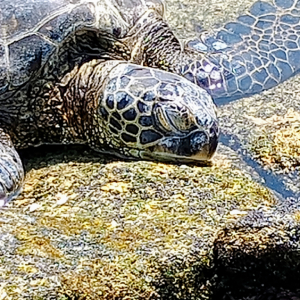
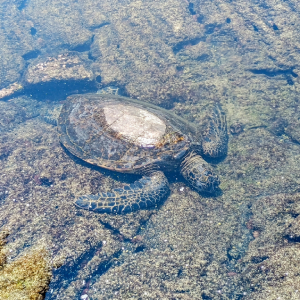
As we exited the Al Mauka Makai Trail and turned north, we began this coastal trail which runs north and south for 175 miles (although not continuous). Within a quarter mile we could see seven large green sea turtles in the tide pools. The turtles were either sleeping on land, resting in the water or were swimming. Since it was low tide, a could see black sea urchins (Photo#8) and some butterfly fish and angelfish that were caught in the tide pools. We decided to hang out next to these turtles for a while instead of hiking farther of the hiking trail to the large ‘Aimakapa Fishpond. We really enjoyed our up-close encounters with these wonderful creatures.

HIKED ALA MAUKA MAKAI Hiking Trail, Kaloko-Honokohau National Historic Park, Hawaii

Hiking Team: Dave Miller, Rosie Miller

Date: March 12, 2025

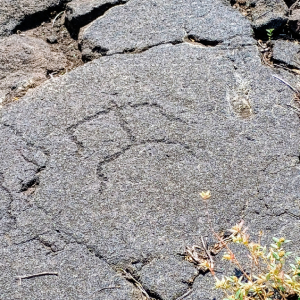
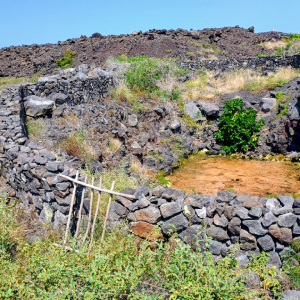
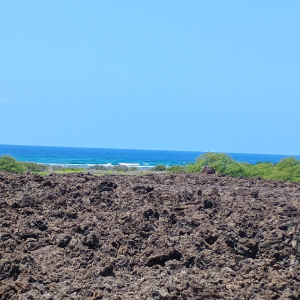
It was a hot 87 degrees with occasional ocean breezes as we hiked this 1.5 mile out and back trail. The trail was a combination of black lava rock and black sand. A short .1-mile spur trail called the Ki’iPohaku Petroglyph Path took us to petroglyphs carved into the black rock. The trail took us past black rock fences where animals were once kept there. We saw one small fishpond just off the trail and eventually the trail led us to the beach where we began a second trail.

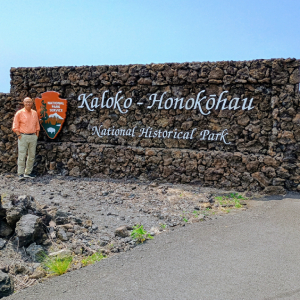
KALOKO-HONOKOHAU NATIONAL HISTORIC PARK, Kailua-Kona, Hawaii

Expedition Team: Dave Miller, Rosie Miller

Date: March 12, 2025

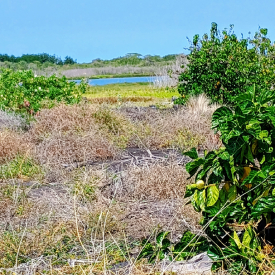
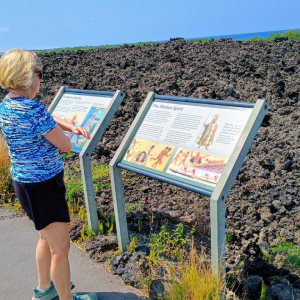
This site of an ancient settlement educated people of how the natives were stewards of the water and land, being able to live on this barren volcanic rock. The park also has two fishponds used long ago, petroglyphs and a religious site. We hiked two trails here and saw many green sea turtles.

HIKED COASTAL TRAIL Pu’uhonua O Honaunau National Historic Park, Hawaii

Hiking Team: Dave Miller, Rosie Miller

Date: March 11, 2025

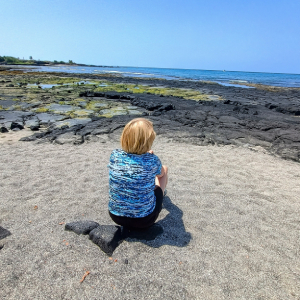
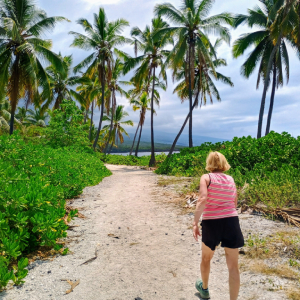
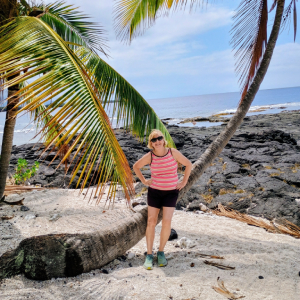
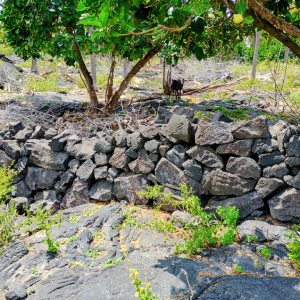
After hiking the 1871 Trail, we walked over just past the Great Wall and began hiking this coastal trail. It was sandier with far less black volcanic rocks. Palm trees and green plants lined one side (and a few wild goats), and the beautiful ocean lined the other. In the round lava tidepools, we saw a senior citizen couple (Photo#4) enjoying it and using it as a whirlpool. We came upon an ancient wall made from black lava rock. The Coastal Trail eventually linked up with the 1871 Trail.

HIKED 1871 NATIONAL HISTORIC TRAIL Pu’uhonua O Honaunau National Historic Park, Hawaii

Hiking Team: Dave Miller, Rosie Miller

Date: March 11, 2025

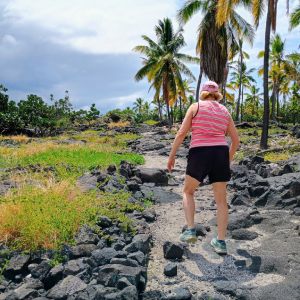
This 2.25 mile out and back trail takes you to the Ki’ilae Village, an old fishing village. It was a hot day, and the trail was all black volcanic lava rock. Before we reached the first mile the trail was blocked by a family of wild goats. There were dozens of males, females and baby goats all along the path. I saw a mongoose dart between lava rocks. This trail was rough on the knees and joints.

PU’UHONUA O HONAUNAU NATIONAL HISTORIC PARK, Honaunau, Hawaii

Hiking Team: Dave Miller, Rosie Miller

Date: March 11, 2025

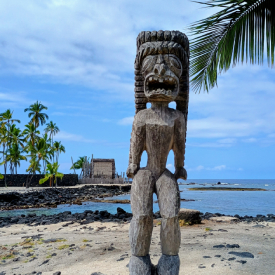
This park preserves the site where, until the 19th century, Hawaiians who broke kapu (one of the ancient laws) could avoid certain death by fleeing to this place of refuge. The grounds just outside the great wall were home to several generations of powerful chiefs. The park is one of only four places in Hawaii where the Hawaii flag can fly alone without the American flag.

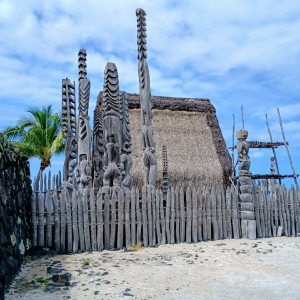
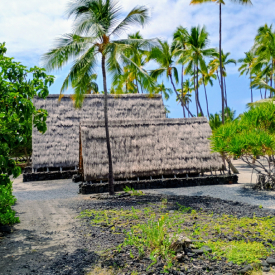
In the Royal grounds next to the cove, sits a remake of the Hale o Keawe temple and mausoleum (Photo#2). Carved wood statues adorned the grounds and under thatched roof structures were examples of games, outrigger canoes, pottery and food. We hiked two nearby trails.

ROAD TO HANA NATIONAL SCENIC HIGHWAY Maui, Hawaii

Expedition Team: Dave Miller, Rosie Miller

Date: March 5 & 8, 2025

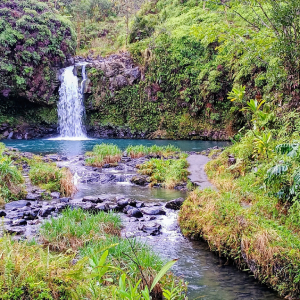
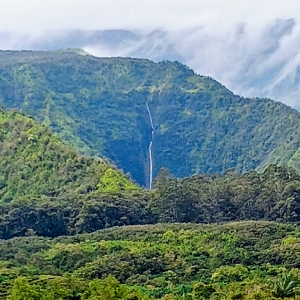
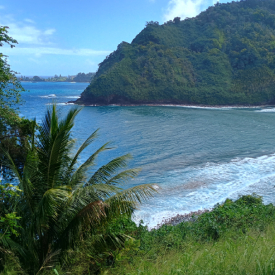
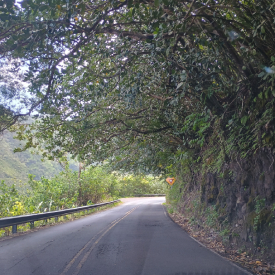
One of the nation’s scenic roads, the twisting road from Kahului to Hana was only 64.4 miles but took 2.5 to 3 hours due to 59 bridges (most are narrow and one lane) and an estimated 620 curves (that’s even more than my beautiful shapely wife has).  The average speed is about 26 mph. The road took us through beautiful rainforests, past numerous waterfalls, plunging pools, incredible seascapes and colorful food trucks. 

FLORIDA BLACK BEAR NATIONAL SCENIC HIGHWAY Florida

Expedition Team: Dave Miller, Rosie Miller

Date: November 14, 2024

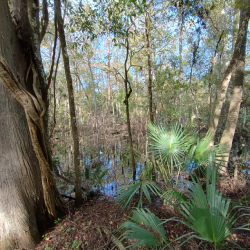
This sixty mile stretch of road along Florida State Route 40 begins just west of I-95 in Ormond Beach and goes west to Silver Springs. Along the drive it passes through the Ocala National Forest. We had picked four trails to hike in the National Forest, but they were closed due to hurricane damage (high water or downed trees). We still enjoyed seeing the trees, wetlands, wildflowers but no bears although the density of black bear population is highest in this region.