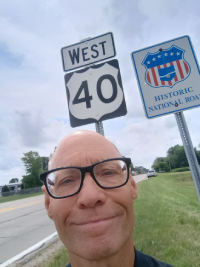
Expedition Team: Dave Miller, Rosie Miller, Tyler Kaltenbach
Date: August 2024
I traveled on this famous road many times in Ohio, Indiana and Pennsylvania. The National Road, in many places known as Route 40, was built between 1811 and 1834 to reach the western settlements. It was the first federally funded road in U.S. history. George Washington and Thomas Jefferson believed that a trans-Appalachian Road was necessary for unifying the young country. In 1806 Congress authorized construction of the road and President Jefferson signed the bill. In 1811 the first contract was awarded and the first 10 miles of road built. Tollgates and tollhouses were then built by the states, with the federal government taking responsibility for road repairs.
The road, also called the Cumberland Road, National Pike and other names, became Main Street in these early settlements, earning the nickname “The Main Street of America.” The height of the National Road’s popularity came in 1825 when it was celebrated in song, story, painting and poetry. During the 1840s popularity soared again. Travelers and drovers, westward bound, crowded the inns and taverns along the route. Huge Conestoga wagons hauled produce from frontier farms to the East Coast, returning with staples such as coffee and sugar for the western settlements. Thousands moved west in covered wagons and stagecoaches traveled the road keeping to regular schedules.
In Ohio, the byway extends 225 miles from the West Virginia border to the Indiana state line.