HIKED ALLAN CRUICKSHANK MEMORIAL TRAIL Merritt Island National Wildlife Refuge Titusville, Florida

Hiking Team: Dave Miller, Rosie Miller

Date: December 4, 2023

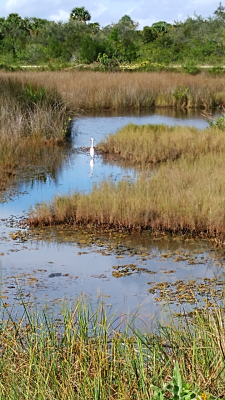
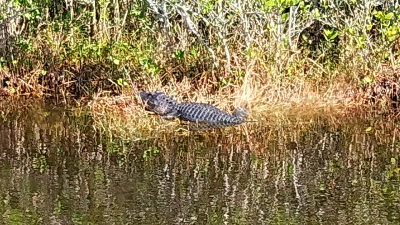
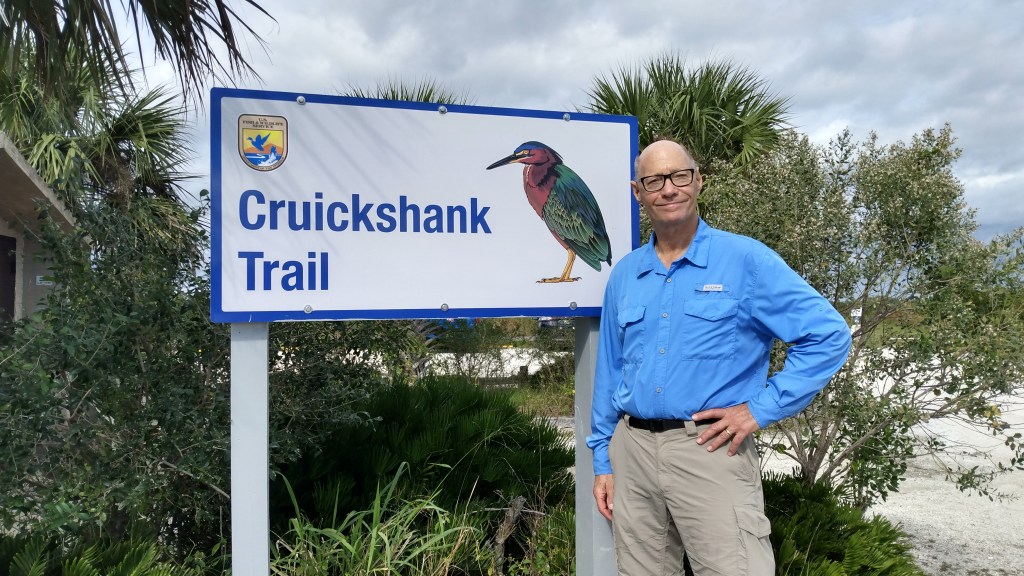
We paid $10 to drive the special Black Point Wildlife Drive, right in the heart of the wildlife refuge habitat. This 7.7-mile road took us through and past wetlands, shallow streams and mudflats, grasslands, shallow ponds, and other habitats. We saw hundreds of migratory birds such as green herons, egrets, spoonbills, ibises, anhinga, and other wading birds. In the sky overhead, two eagles circled us. We also saw many alligators along the stream beside the road sunning themselves and giving us the evil eye. Stop #9 of twelve stops along the road about five miles along Black Point Drive, we parked, ate lunch in the car, and hiked some of the Cruickshank Trail. This five-mile mowed grass trail took us along a dike surrounded by salt marshes. Large, beautiful birds were everywhere as well as smaller wrens and bitterns. Fortunately, no alligators crawled out to make a surprise appearance. We also saw one large turtle. We climbed an observation tower to look out over the marsh land, mangroves, and spot birds. Over 300 species of birds have been recorded here. Photo #5 is my favorite. If you look really close, can you find the eye of the alligator?
HIKED PALM HAMMOCK TRAIL Merritt Island National Wildlife Refuge Titusville, Florida

Hiking Team: Dave Miller, Rosie Miller

Date: December 4, 2023

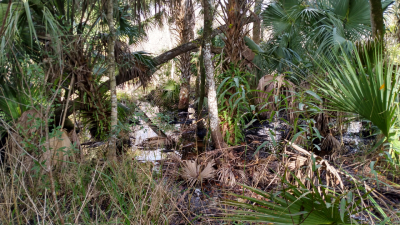
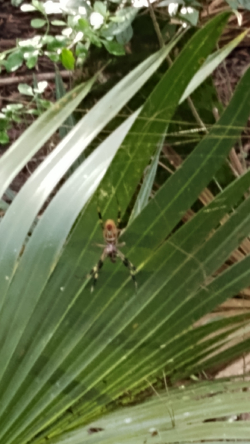
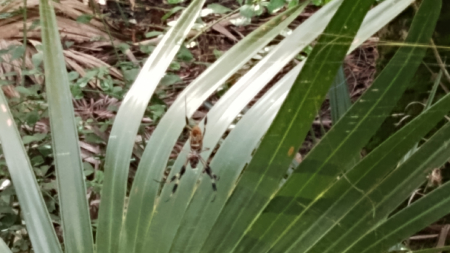
This two-mile loop trail on footpaths and some boardwalk took us through a dense palm hammock, a marsh swamp, scrub palms, and in some places an oak canopy. The trail was closed halfway along as a small bridge over the swamp was under repair. We did see some egrets, frogs, and the large, colorful, and scary looking golden silk spiders. Just south of this trail is the NASA Space Shuttle Landing Strip and Facility.  

HIKED OAK HAMMOCK TRAIL Merritt Island National Wildlife Refuge Titusville, Florida

Hiking Team: Dave Miller, Rosie Miller

Date: December 4, 2023

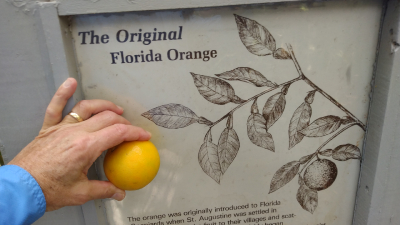
This .7-mile loop trail on boardwalks and foot paths winds through dense seasonally flooded forests. Basically, it was very swampy and reminded me of Congaree National Park in South Carolina. Along the trail we saw a dozen large golden silk spiders.  They are very colorful with yellow and black markings on the body with tufts of hair on the legs. The ranger told me the spider web silk is extraordinarily strong and withstands twice the stretching as nylon. The web has even been used as a fishing net.  The large spiders made Rosie very alert and uneasy. A couple Florida orange trees existed in the thick hammock, and I picked up a newly fallen orange to eat. As we hiked the temperature climbed to 82 degrees, humidity and mosquitos bugged us in this jungle-like, marshy hammock.

MERRITT ISLAND NATIONALWILDLIFE REFUGE Titusville, Florida

Expedition Team: Dave Miller, Rosie Miller

Date: December 4, 2023

Located just north of the NASA Kennedy Space Center, this refuge is one of the most productive estuaries in the USA. Habitats in the 140,000 acres include coastal dunes, saltwater marshes, scrub, pine flatwoods, and hardwood hammocks. One of the largest and most diverse wildlife preserves in Florida and supports one of the highest numbers of threatened and endangered species anywhere in the USA. KSC is located on a barrier island called Merritt Island, 34 miles long, 5 to 10 miles wide. 1/25 of the island is used for space shuttle operations. Wildlife conservation is the top priority in the refuge and these habitats protect migratory birds and more than 1,500 species of plants and animals. Merritt Island is also part of the Great Florida Birding Trail for a good reason as out of the 358 species of birds we saw hawks, eagles, egrets, herons, ducks, sandpiper, gulls, anhinga and many more. We hiked several trails in the refuge and saw many alligators but did not see any manatees at the Allenhurst observation area. A short drive east in the refuge off Kennedy Parkway we arrived at the Atlantic Ocean and the southern end of the beautiful Canaveral National Seashore.

HIKED MARSH TRAIL Fort Matanzas National Monument St. Augustine, Florida

Hiking Team: Dave Miller, Rosie Miller

Date: December 7, 2023

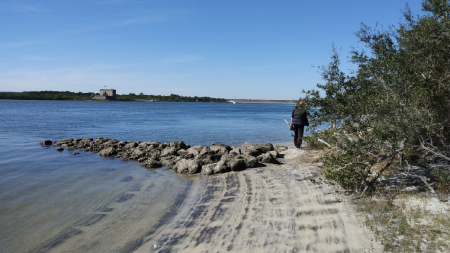
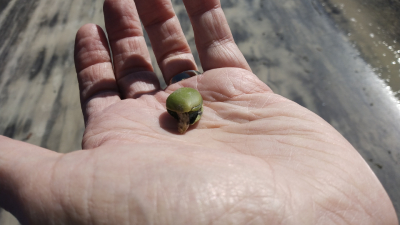
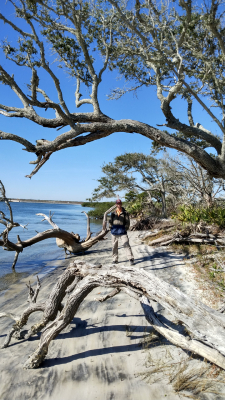
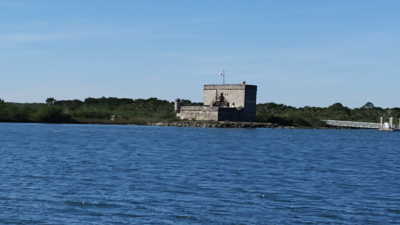
This tough .5-mile trail took us north along the Matanzas River along the sand as we ducked under and around numerous mangroves making up the hammock and marsh. I picked up a small green mangrove seed. Across the river we could see Fort Matanzas and I could spot some oysters in the shallow water. Lots of large birds such as herons, egrets, and spoonbills flew all around us. The trail ended at the marsh. 

HIKED COASTAL HAMMOCK TRAIL Fort Matanzas National Monument St. Augustine, Florida

Hiking Team: Dave Miller, Rosie Miller

Date: December 7, 2023

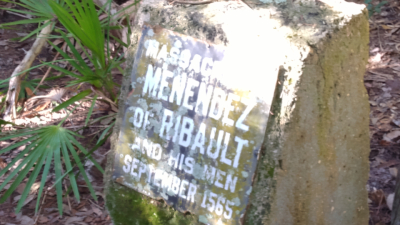
This .7-mile boardwalk trail east of the visitor center winds through a thick coastal forest or hammock of dense thickets of palmetto (low growing palms) before encountering dunes by the river. We pasted saw palms and sabal palms used for various purposes by Florida Indians. We looked for gopher tortoises, marsh rabbits, lizards, and black racer snakes. A stone marker along the trail marked the site of the horrible 1565 massacre of 250 French by the Spanish soldiers.

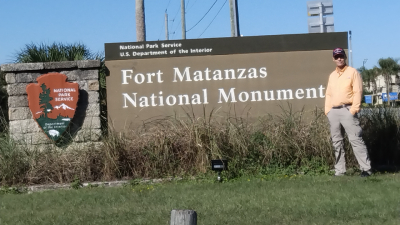
FORT MATANZAS NATIONAL MONUMENT St. Augustine, Florida

Expedition Team: Dave Miller, Rosie Miller

Date: December 7, 2023

Built in 1569 along the Matanzas River on Rattlesnake Island by the Spanish as an unarmed wooden watchtower, thatched hut, and stockade, it was to warn the city of St. Augustine if the British, pirates or other invaders were approaching. In 1740, the watchtower was replaced with a masonry fort (walls made from solid coquina shellstone) with cannons. In 1742 the fort repelled British ships that was approaching. The fort was restored in 1916 to preserve its historic value.

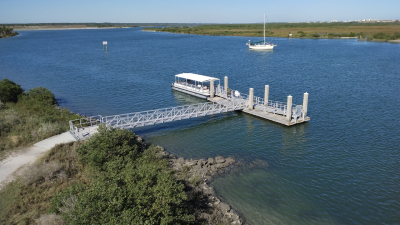
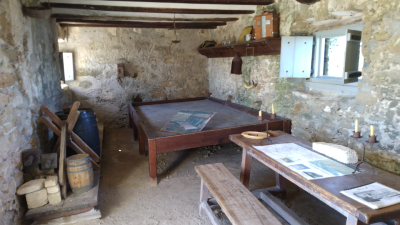
Rosie and I took a ferry boat named the “Trinite” across the river from the national park visitor center on Anastasia Island to the fort watching for dolphins, blue herons, and cormorants along the way. We toured the fort, climbed a steep ladder while squeezing through the small opening to the top observation deck. We toured the soldiers and officer’s quarters, powder magazine room and gun deck. On the deck we could see the Atlantic Ocean and the inlet to the east. St. Augustine was 14 miles upstream. Fort Matanzas is the only fortified Spanish watchtower in the continental United States.

FORT PULASKI NATIONAL MONUMENT Savannah, Georgia

Expedition Team: Dave Miller, Rosie Miller, Joe Gillivan

Date: December 2, 2023

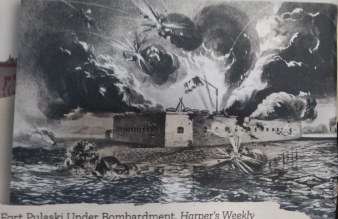
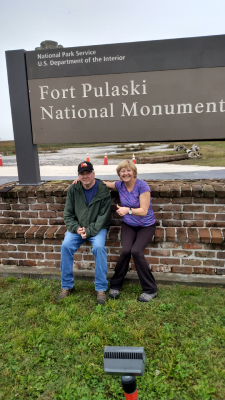
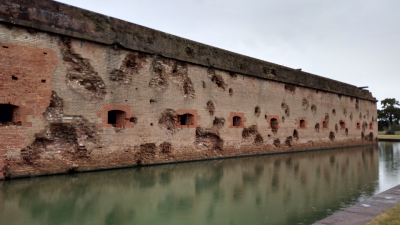
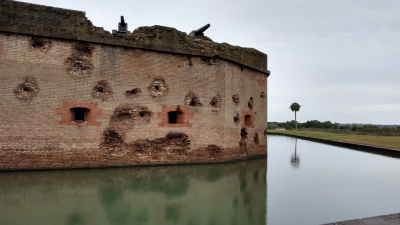
The fort’s construction started in 1829 and 25 million bricks later were completed in 1847. Located on marshy Cockspur Island the fort guarded the river approaches to Savannah. In April 1862, the Union Army attacked the fort from Tybee Island a mile away using ten new experimental rifled cannons with new projectiles that bored through the fort’s walls. The range of the Confederates cannons was only half the distance of the Union cannons. In only 30 hours since the bombardment began, 5,275 shots and shells landed, and the 385 Confederates surrendered the fort fearing that these new shells would hit the fort’s main powder magazine. The Union took over the fort and installed 60 cannons.

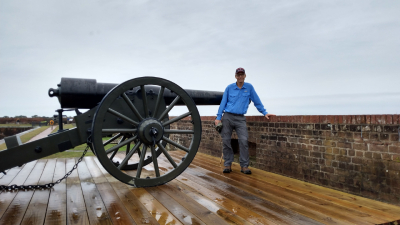
Today, the fort has been restored and is in excellent condition. We walked through the demilunes and underground rooms in front of the fort examining the coquina walls. These tunnels under the grassy mounds were used to store supplies and ammunition. We crossed the moat via the drawbridge and toured many of the rooms, the powder magazine rooms and living quarters. Climbing the stairs to the top floor, we stood by the cannon and saw the view the soldiers saw of Cockspur and Tybee Islands. In the distance I could barely make out the small Cockspur Island Lighthouse where we hiked too later. The park ranger told us a lot of the fort’s history and a paranormal story which is under a different post. Walking outside the fort you could see along the 32-foot-high walls which were 7 to 11 feet thick where parts were demolished by the shells. Some original artilleries were still imbedded in parts of the wall.  

HIKED NORTH PIER LOOP TRAIL Fort Pulaski National Monument, Savannah, Georgia

Hiking Team: Dave Miller, Rosie Miller, Joe Gillivan

Date: December 2, 2023

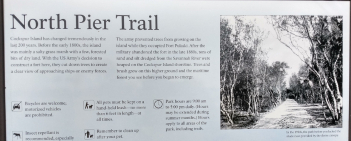
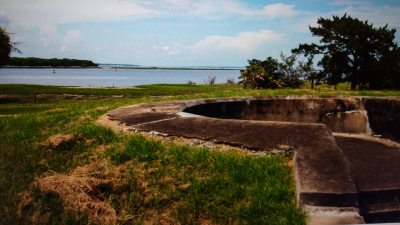
Our second hike on Cockspur Island was this .7-mile trail north of Fort Pulaski. The trail wove between a maritime forest of trees, brush, and a few wildflowers. This trail led us to the site of the historic North Pier where it meets the North Channel of the Savannah River. Boat after boat docked here to bring materials to construct the fort and later to supply the fort throughout the 1800’s. Inland along the trail we climbed up onto the Hambright concrete gun battery constructed in 1899 that was designed to protect a minefield in the river. As the temperatures climbed into the 70’s, it became muggy hiking the trail as no breeze from the river could be felt.

CANAVERAL NATIONAL SEASHORE Titusville, Florida

Expedition Team: Dave Miller, Rosie Miller

Date: December 4, 2023

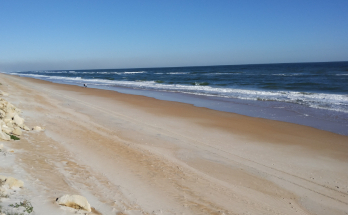
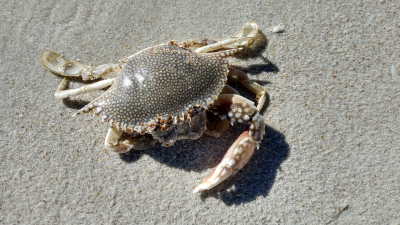
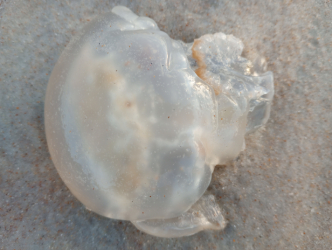
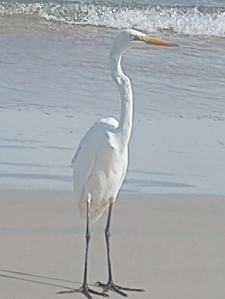
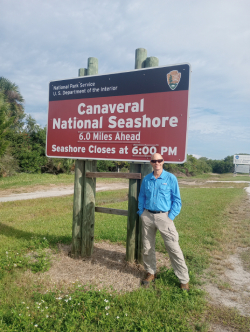
We entered the south end of the seashore from Merrit Island’s Beach Road.  The 24-mile shore along the Atlantic Ocean was pristine beach, sand dunes, open lagoon, coastal hammock, and pine flatwoods and no buildings or seawalls. Two thirds of the park is Mosquito Lagoon, a large estuary where fish, oysters, clams, and shrimp live. Marine turtles use the beach for nesting and laying eggs. We walked the beach briefly and saw birds, a crab, jellyfish, and beautiful scenes.